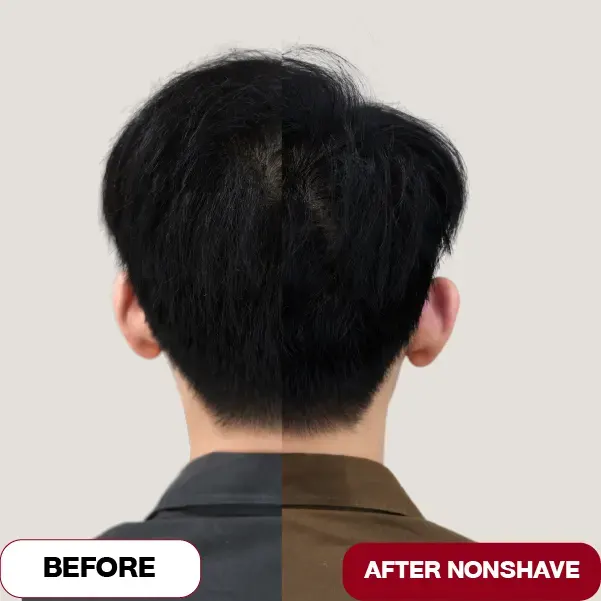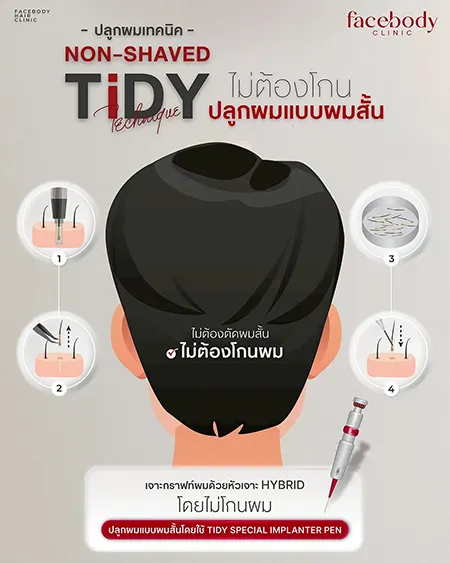
Non-Shaven FUE is a variation of Follicular Unit Excision (FUE), a surgical technique in which individual follicular units are removed from the donor area and transplanted into areas affected by hair loss.
The donor area is usually located at the back or sides of the scalp, where suitable hair follicles can be selected for transplantation.
Unlike conventional FUE procedures that often involve shaving a larger portion of the donor area, Non-Shaven FUE aims to preserve more of the surrounding hair.
This can help patients maintain their existing hairstyle and make the treated donor area less noticeable during the initial recovery period.
Nevertheless, the procedure still involves surgical extraction and implantation of follicular units. It is not a scar-free or recovery-free treatment.
Does Non-Shaven FUE Mean No Hair Is Shaved at All?
Not necessarily.
The terms non-shaven, unshaven, and no-shave are sometimes used broadly, although the surgical techniques may differ.
Common approaches include:
-
Selective trimming: Only the hairs associated with the follicular units selected for extraction are shortened.
-
Concealed partial shaving: Small sections of the donor area are shaved and covered by longer surrounding hair.
-
Unshaven long-hair extraction: Selected follicular units are removed while retaining longer hair shafts, where technically feasible.
The recipient area, where the grafts will be implanted, may also require different preparation from the donor area.
Patients should therefore confirm exactly which areas will be trimmed or shaved before undergoing treatment.
For those who wish to preserve the length of transplanted hair shafts, Long Hair FUE transplantation may also be worth discussing during a consultation.
Who May Be Suitable for Non-Shaven FUE?
This technique may appeal to people who want to minimize visible changes to their hairstyle.
| Patient Group |
Why They May Consider Non-Shaven FUE |
| Executives and business professionals |
To maintain their usual appearance during meetings and professional activities |
| Actors, presenters, and content creators |
To reduce visible changes to their hairstyle |
| Women and men with longer hair |
To preserve hair length in the surrounding donor area |
| Patients seeking greater discretion |
To make the donor area less noticeable during early recovery |
However, personal preference alone does not determine suitability.
A hair restoration surgeon must assess the cause and pattern of hair loss, donor hair density, scalp condition, the number of grafts required, and the patient’s long-term treatment goals.
Some patients may benefit more from conventional shaved FUE, particularly when extensive graft harvesting is required.
Non-Shaven FUE vs. Shaved FUE: What Is the Difference?
Both techniques use the same underlying principle: individual follicular units are harvested from the donor area and transplanted into the recipient area.
The main difference is how the existing hair is prepared before extraction.
| Feature |
Conventional Shaved FUE |
Non-Shaven FUE |
| Donor area preparation |
A larger area is usually shaved or trimmed |
Most surrounding hair may remain unshaven |
| Surgical visibility |
Generally provides easier access to follicles |
Extraction takes place among existing hair |
| Appearance after surgery |
Shaved areas may be more noticeable |
Longer hair may help conceal the donor area |
| Procedure duration |
Depends on graft count and complexity |
May take longer in some cases |
| Graft harvesting |
Planned according to donor availability |
May require additional technical planning |
| Suitability |
Appropriate for many hair transplant cases |
Depends on donor characteristics and graft requirements |
Neither technique is automatically superior.
The most appropriate approach depends on the patient’s hair characteristics, the surgical plan, and the surgeon’s assessment.
Hair Transplantation Technology at Facebody Clinic
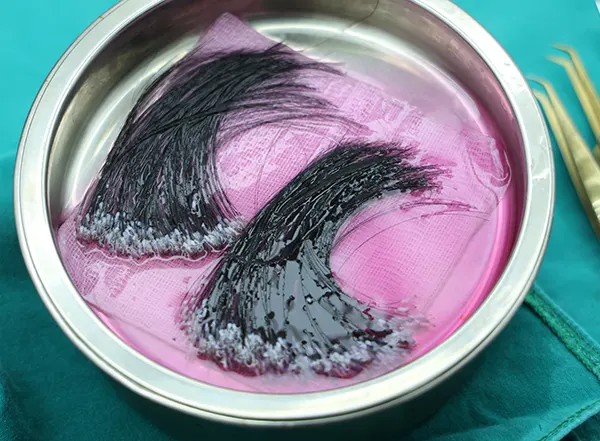
Facebody Clinic describes the use of specialized FUE extraction equipment and implanter pens as part of its hair transplantation procedures.
FUE Graft Extraction
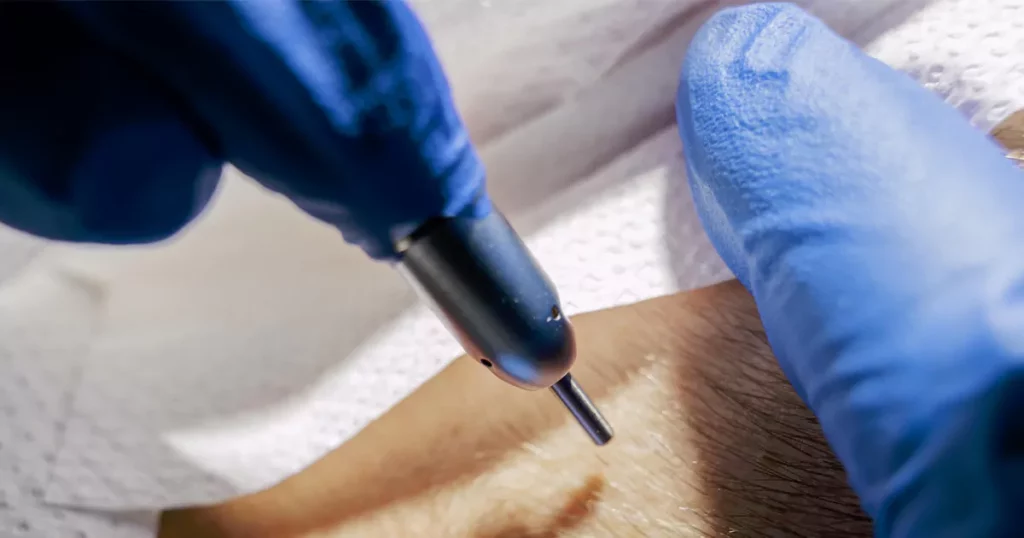
FUE involves using a small surgical punch to make an incision around an individual follicular unit before carefully extracting it from the donor area. The surgeon must consider several factors, including hair direction, follicular anatomy, punch size, and donor hair distribution. In Non-Shaven FUE, the presence of longer surrounding hair can make access and visualization more technically demanding.
Implanter Pens
Implanter pens are instruments designed to assist with placing follicular unit grafts into the recipient area.
Depending on the surgical technique, these instruments can be used to place grafts at planned angles, directions, and depths.
However, the use of a particular device does not independently guarantee better graft survival, faster healing, or a more natural-looking result.
Surgical planning, graft handling, physician expertise, and individual patient factors remain important
How Does Non-Shaven FUE Work?
Although the procedure varies according to the patient’s needs, it generally involves the following stages.
1. Hair and Scalp Assessment
The surgeon evaluates the patient’s hair loss pattern, donor hair availability, scalp condition, and suitability for transplantation.
The assessment also considers whether the donor area can provide the required number of grafts without causing excessive visible thinning.
2. Hairline Design and Treatment Planning
The recipient area and proposed hairline are planned according to facial proportions, age, hair characteristics, and the possibility of future hair loss.
The number of grafts required is estimated based on the treatment area and donor hair availability.
3. Donor Area Preparation and Graft Extraction
The donor area is prepared using the selected Non-Shaven FUE approach.
Under local anesthesia, individual follicular units are harvested using appropriate FUE instruments.
The extracted grafts are then handled and prepared for implantation.
4. Graft Implantation
The follicular units are placed into the planned recipient sites, taking account of hair direction, distribution, and the intended hairline design.
Patients receive postoperative instructions to help protect the transplanted grafts during the early healing period.
Benefits of Non-Shaven FUE
The main advantage of Non-Shaven FUE is the ability to preserve more of the patient’s existing hairstyle.Potential benefits include:
- Less noticeable donor area: Longer surrounding hair may conceal areas where grafts have been harvested.
- Greater hairstyle continuity: Patients may avoid a dramatic change in their appearance.
- More discretion: Some patients feel more comfortable returning to social or professional settings without a visibly shaved donor area.
- Individualized preparation: The surgeon can select a shaving or trimming strategy based on the patient’s needs.
These are primarily practical and cosmetic advantages.They do not mean that Non-Shaven FUE eliminates postoperative swelling, scabbing, discomfort, or the possibility of scarring.
Limitations and Considerations Before Choosing Non-Shaven FUE
Operating among longer hair requires careful planning and may make some stages of the procedure more challenging.
Depending on the case, the treatment may take longer than conventional shaved FUE.
Patients requiring a large number of grafts may also face limitations related to donor area access, harvesting efficiency, and procedure duration.
Importantly, donor hair is a limited resource. Removing too many follicular units can cause visible thinning or affect future treatment options.
Non-Shaven FUE also creates small extraction wounds that can leave tiny scars. Preserving the surrounding hair may make these less visible, but it does not prevent scarring altogether.
A medical consultation is therefore essential to determine whether maintaining the existing hairstyle is compatible with a safe and appropriate treatment plan.
What Happens After a Non-Shaven FUE Hair Transplant?
Although the surrounding donor hair may remain longer, the scalp still needs time to heal.
Patients may experience temporary redness, swelling, tenderness, or small scabs in the donor or recipient areas.
The transplanted hair shafts commonly shed during the weeks following surgery. This shedding does not necessarily mean the transplanted follicles have failed.
New hair growth generally becomes noticeable after several months, and the final cosmetic result takes considerably longer.
As a general guide, new growth may begin to appear around four months, while fuller results may take approximately 10–18 months.
Recovery and hair growth vary between individuals.
Patients should follow their surgeon’s specific instructions for washing, sleeping, physical activity, and protecting the grafts during the early postoperative period.
Non-Shaven FUE vs. Long Hair FUE
These terms are related, but they are not interchangeable in every case.
Non-Shaven FUE refers broadly to FUE approaches designed to avoid extensive shaving of the donor area. Some methods still involve trimming the selected donor hairs before extraction.
Long Hair FUE involves harvesting follicular units while retaining longer hair shafts.
This can provide a temporary visual preview of the transplanted hair’s direction and arrangement shortly after the procedure.
However, the long hair shafts may still shed during the normal postoperative hair cycle. The immediate appearance should not be mistaken for the final transplantation result.
Patients interested in retaining longer hair shafts can explore Long Hair FUE techniques and treatment considerations.
How Much Does Non-Shaven FUE Cost?
The cost of Non-Shaven FUE depends on several factors, including:
-
The number of grafts required
-
The size and location of the recipient area
-
Donor hair density and characteristics
-
The complexity and duration of the procedure
-
The technique selected and the clinic’s pricing structure
A personalized quotation generally requires an assessment of the scalp and donor area.
Comparing prices solely on a per-graft basis may be misleading because patients with similar-looking hair loss can require different treatment plans.
Conclusion: Is Non-Shaven FUE Right for You?
Non-Shaven FUE offers an alternative for patients who want to reduce visible changes to their hairstyle during hair transplantation.
Its main advantage is that much of the existing donor hair can remain in place, potentially helping conceal the harvesting area during the early recovery period.
However, the technique is not appropriate for every patient and does not eliminate surgical risks or healing time.
The best approach should be selected after evaluating the cause of hair loss, donor hair quality, graft requirements, and long-term restoration goals.
Patients considering a no-shave procedure should discuss the exact extraction technique and expected recovery with a qualified hair restoration surgeon.

 Hair transplant surgery